REVIEW · KOTOR
Private Kotor Old Town Walking Tour
Book on Viator →Operated by Kotour · Bookable on Viator
Kotor’s Old Town rewards slow steps. This 1-hour private-style walking tour gets you oriented fast, with a guide who connects the squares you’ll see to Montenegrin traditions and everyday life. I like that you get a clear route through the big sights, and I like the human touches—guides often share stories from life in Kotor (not just dates). The main drawback: it’s short, so if you want very deep history, you may want something longer or ask more pointed questions.
You’ll meet at the Old Town main gate area and start right where the story begins: the guide gives context for Kotor and Montenegro, then leads you square by square. Expect a small group (up to 10) and an easy pace that works for a wide range of ages—while still letting you stop for photos and questions.
In This Review
- Key Highlights You’ll Actually Notice
- A One-Hour Orientation Through Kotor Old Town’s Squares
- Where You Start at Trg od Oružja and How to Find the Main Gate
- Armory Square Clock Tower: The First Big Landmark to Anchor Your Walk
- Flour Square, Buca and Pima Palaces: The Old Trading Square Feeling
- St. Tryphon Cathedral Square: Where the City’s Story Becomes Visible
- Maritime Museum Square and Karampana Fountain Photos That Mean Something
- St. Lucas and St. Nicholas Orthodox Churches: Layered Beliefs You Can See
- Price and Logistics: Is $66.38 for an Hour Good Value?
- Guides Who Make the Walk Funny, Personal, and Flexible
- Who Should Book This Kotor Old Town Walking Tour
- Should You Book This Kotor Tour?
- FAQ
- FAQ
- How long is the Kotor Old Town walking tour?
- How much does the private Kotor Old Town walking tour cost?
- Where does the tour start?
- Where does the tour end?
- Is the tour offered in English?
- How many people are in the group?
- What’s included in the price?
- What is not included?
- Can I get a mobile ticket?
- Is there free cancellation?
Key Highlights You’ll Actually Notice
- A guided circuit of major plazas so you don’t wander the walled city aimlessly
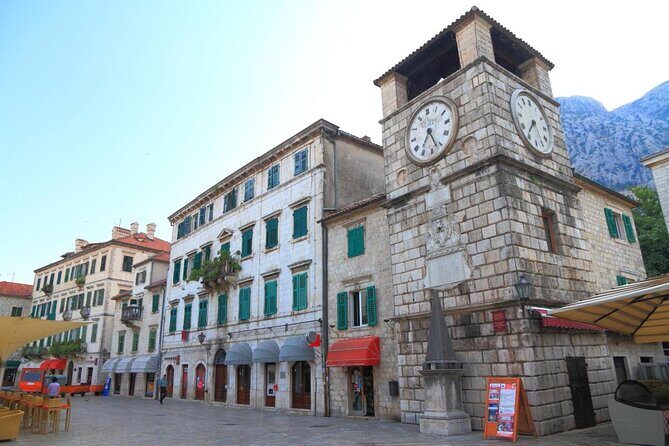
- Armory Square clock tower as an early “anchor” for the walk
- Flour Square with Buca and Pima palaces for a look at the old trading vibe
- Karampana Fountain at Maritime Museum Square (great landmark for your photos)
- St. Tryphon Cathedral Square plus churches that show the area’s layered culture
- Up to 10 people, which keeps the experience more relaxed than big group tours
A One-Hour Orientation Through Kotor Old Town’s Squares
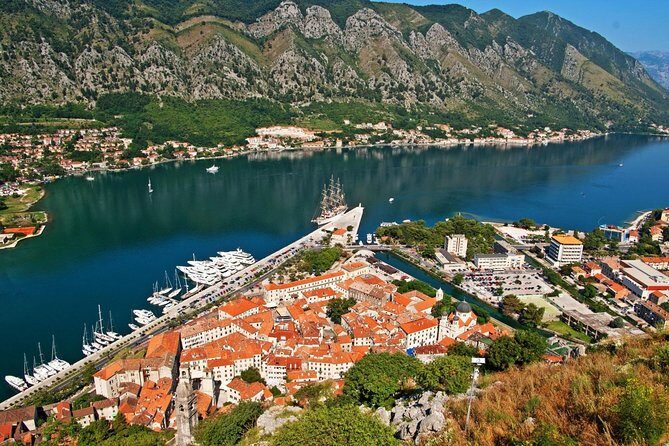
If you only have a short time in Kotor, this kind of tour does a smart job. In about an hour, you get the bones of the Old Town—where the important squares are, why they matter, and what to look for when you go back on your own later. Instead of seeing the waterfront and the walls as a pretty backdrop, you start to understand how the city functioned and how different influences shaped what you see today.
The “private” part is helpful mainly because it’s intimate compared with mega-coach crowds. And because the tour is guided, you’ll get more than a map. You’ll get explanations you can use immediately—like how to read the city by its plazas and religious landmarks, not just by its buildings.
One thing to keep in mind: this is an overview tour. A few people have said they wanted more history than what they received, or that the guide spent more time on personal background. That’s not necessarily bad—it just means you should treat this as an excellent introduction, not a full academic course.
Other Kotor Old Town walking tours we've reviewed in Kotor



Where You Start at Trg od Oružja and How to Find the Main Gate

Meeting point is Main Info Point of Tourism Organisation of Kotor, at Trg od Oružja, Kotor (right by the Old Town’s main gate area). That’s a good setup because you don’t waste time crossing the city once the walk begins—you’re already in the right zone.
The start matters because guides typically begin with a story about Kotor and Montenegro before you move. It sets expectations. You’ll know what you’re looking at when you first enter the walled city, and that makes the next 60 minutes feel faster.
Practical tip: the meeting spot can get crowded, especially if you arrive during busy port hours. One helpful strategy is to pause near nearby sidewalk cafes just inside/near the gate area and keep an eye out for your guide sign. If the sign looks generic, don’t stress—scan for the person holding it and for anyone checking names or group lists.
Armory Square Clock Tower: The First Big Landmark to Anchor Your Walk

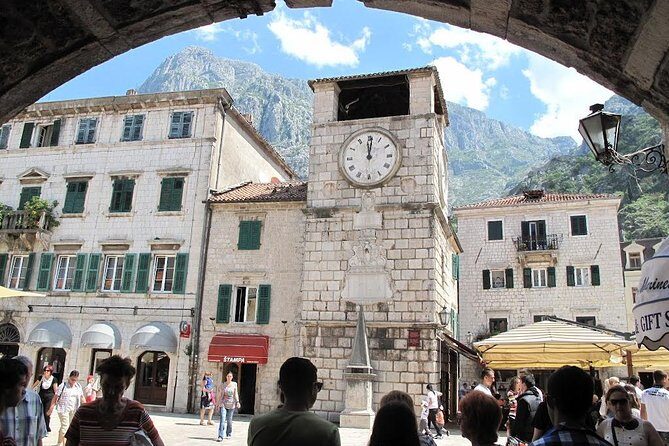
Your route kicks off through the squares and streets, and one of the first “wow, I see it now” moments tends to be Armory Square and its clock tower. This is the kind of stop that works well early in the tour because it gives you a reference point. After you see the clock tower, it’s easier to orient yourself when you later explore on your own.
More importantly, the guide uses this stop to explain how the Old Town was organized—how plazas functioned as gathering points and how civic life played out in public spaces. Even if you’re not a history buff, you’ll start to notice details you would otherwise walk past, like the city’s layout and the way landmarks pull your attention.
If you’re the type who loves asking questions, this is a good section to start doing it. The tour format is designed so you can get answers as you go, instead of waiting until the end.
Flour Square, Buca and Pima Palaces: The Old Trading Square Feeling
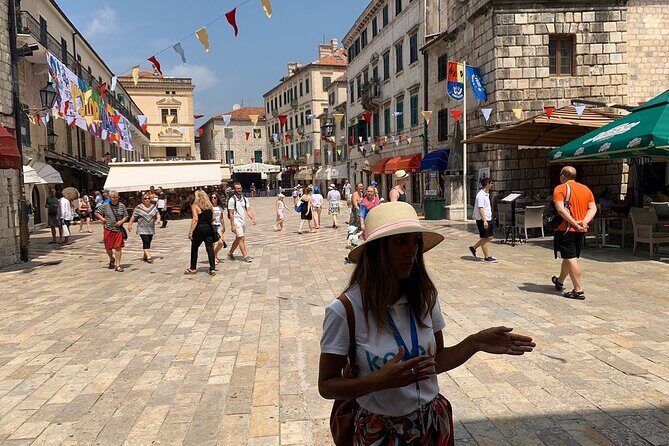
Next up is Flour Square, an older trading square where you’ll see Buca and Pima palaces. This stop shifts the tour from “pretty plazas” into “how the city worked.” Trading squares are where a city’s economy becomes visible. You can practically imagine the bustle—merchants, goods, bargaining—because the architecture and layout are built for public movement.
What I like about this kind of square is that it teaches you to look with your eyes instead of your assumptions. You’ll start spotting visual clues: which buildings relate to commerce, which streets seem designed for flow, and which landmarks were meant to signal importance.
There’s also a nice pacing rhythm here. After Armory Square’s civic landmark feel, Flour Square brings a different mood—more about business and daily life. That contrast keeps the tour from blending into a single long street.
St. Tryphon Cathedral Square: Where the City’s Story Becomes Visible
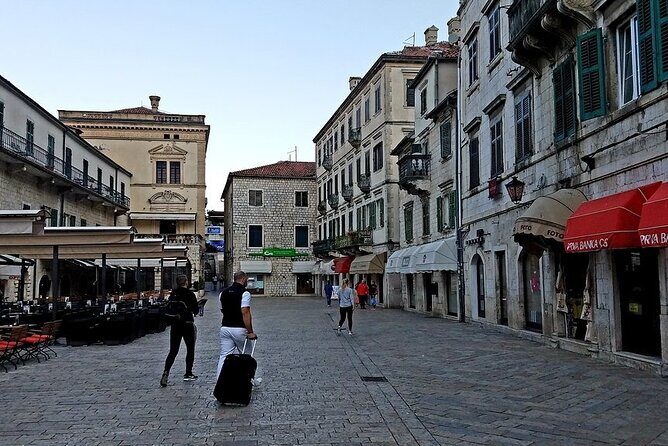
St. Tryphon Cathedral Square is one of the biggest stops on the walk. Even if you don’t go inside, being in the cathedral square helps you understand why Kotor’s Old Town is so strongly associated with identity and faith. This is where the city’s religious architecture becomes a main character in the landscape.
A key detail to plan around: entrance fees to the Cathedral and museum are not included. So if you want to step in, you’ll need to budget extra time and money. Many people find the walk itself is still worth doing because the square stop sets context before you decide whether to enter.
Also, this is a good moment for photo ops. Cathedrals and plazas photograph well in daylight, and being here early in your Old Town visit helps. You’ll later know which angles to return for.
Other walking tours we've reviewed in Kotor





Maritime Museum Square and Karampana Fountain Photos That Mean Something
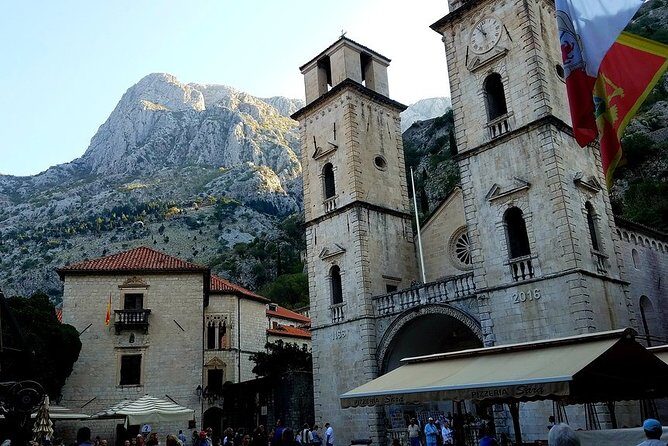
At Maritime Museum Square, you’ll see Karampana Fountain. This is one of those landmarks that is easy to spot in photos, but even better when your guide connects it to the city’s maritime identity.
Kotor’s location and history are tied to the sea. Once you hear the explanation, you start noticing maritime cues beyond the obvious. The fountain becomes more than a pretty object—it’s a visual piece in the story of how the town related to trade, travel, and the wider Adriatic world.
If you’re the type who likes to take photos without feeling rushed, this is usually a friendly moment. The tour format includes time to stop, look around, and ask questions as you go—so you don’t have to choose between listening and photographing.
St. Lucas and St. Nicholas Orthodox Churches: Layered Beliefs You Can See
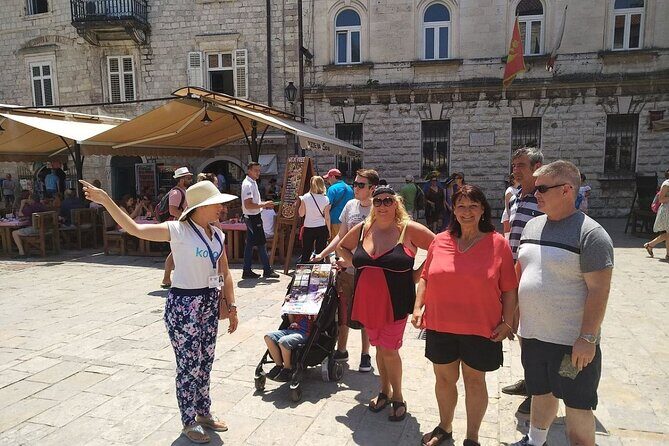
The walk continues through squares where St. Lucas and St. Nicholas Orthodox churches sit. These stops matter because they show that Kotor’s cultural identity isn’t one-note. In one short loop, you get the sense that the city has absorbed different communities over time and that religious life shaped the Old Town’s public rhythm.
I love these quieter “detail” moments on a walking tour, because they reward curiosity. If you’re paying attention, you start to notice differences in style, placement, and how the streets open into small pockets of space around the churches.
And if you’re traveling with mixed interests—someone who likes architecture, someone who likes stories, someone who just wants great walking—this part helps balance the group.
Price and Logistics: Is $66.38 for an Hour Good Value?
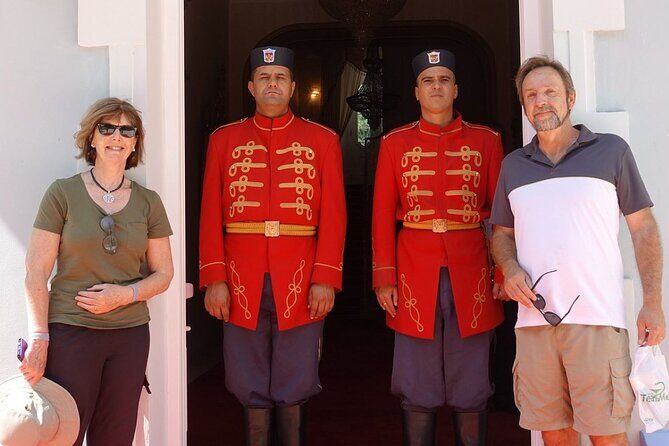
The price is $66.38 per person for about 1 hour. That sounds steep if you’re thinking like a self-guided tourist. But guided walking tours have two built-in value drivers: time saved and understanding gained.
Included benefits help justify the cost: you get a professional guide and a map of the Old Town. The map isn’t just paper—it’s a tool to revisit what you saw and connect it with what the guide explained. Also, the group size is capped at 10, which tends to keep questions possible and the pacing human.
Do keep one expectation in check: entrance fees to the Cathedral and museum are not included. So if you plan to add those stops later, factor that into your budget.
One practical takeaway from the way people describe this tour: it’s best when you treat it as a focused orientation and shortcut to understanding. If you’re hoping for a long, extremely detailed lecture, this one may feel too short.
Guides Who Make the Walk Funny, Personal, and Flexible
A tour lives or dies by the guide, and this one seems to attract guides with strong personalities. Names that come up in positive experiences include Ivana, Vuk (Wolf), Alex, Milosz, Sophia, and Boyanna. Each gets praised for something slightly different—some for humor, some for patience with kids, and some for strong historical framing.
What you can realistically hope for:
- A guide who answers questions along the way
- A pace that works for older visitors as well as families
- Flexibility if you want to pause for photos or adjust the focus
One fun detail worth knowing: some guides are known for small local anecdotes—like encouraging you to ask about the Old Town cats. It’s a tiny thing, but it’s also a sign the guide is paying attention to the living city, not just the monuments.
Just remember the drawback some people noted: if you’re craving very specific historical content, ask directly what you want to know early on. This tour is built to be conversational, so the more you guide the discussion, the more you’ll get from the hour.
Who Should Book This Kotor Old Town Walking Tour
This is a strong pick if you:
- Want a short, high-impact intro to Kotor’s Old Town
- Prefer walking with context rather than wandering with guesswork
- Like learning through plazas and landmarks (squares, fountains, churches)
- Travel with kids or older relatives who need an easy pace
It may not be the best fit if you:
- Want a long, highly detailed history lecture
- Hope the hour will include extensive commerce or deep topic coverage
- Want to skip planning altogether (because Cathedral and museum entry aren’t included)
In other words, think of it like a fast orientation plus a set of stops you’ll be glad you already understand when you come back later.
Should You Book This Kotor Tour?
I’d book it if you want to start your time in Kotor feeling grounded. The route is built around the Old Town’s key squares—so after the walk, you’re not just inside a pretty walled city. You’re also seeing it with a framework: civic life, trading space, religious landmarks, and maritime identity.
If $66.38 feels painful, it helps to compare it to the value of your time. One hour with a good guide can turn hours of self-guided wandering into more meaningful strolling. If you do want more than an overview, pick this as your first step, then choose a deeper tour or add museum/cathedral entry on your own.
FAQ
FAQ
How long is the Kotor Old Town walking tour?
It lasts about 1 hour.
How much does the private Kotor Old Town walking tour cost?
The price is $66.38 per person.
Where does the tour start?
You meet at the Main Info Point of Tourism Organisation of Kotor, Trg od Oružja, Kotor, Montenegro, near the Old Town main gate.
Where does the tour end?
The tour ends back at the meeting point area, just inside the main gate.
Is the tour offered in English?
Yes. It’s operated by an English-speaking guide.
How many people are in the group?
There’s a maximum of 10 travelers.
What’s included in the price?
You get a professional guide and a map of the Old Town.
What is not included?
Entrance fees to the Cathedral and the museum aren’t included, and food and drinks aren’t included either.
Can I get a mobile ticket?
Yes, the tour offers a mobile ticket.
Is there free cancellation?
Yes. Free cancellation is available if you cancel up to 24 hours in advance for a full refund.